Propeller Acoustics
Propeller Interaction Noise
Distributed electric propulsion is a promising concept for future low-emission aircraft and urban air mobility vehicles. By distributing several electrically driven propellers along the airframe, such configurations can improve aerodynamic efficiency, increase redundancy, and reduce the loading of individual rotors. However, the compact arrangement of propellers also introduces new aeroacoustic challenges. Aerodynamic interactions between adjacent propellers, and between propellers and airframe components, can generate additional unsteady blade loading, pressure fluctuations, and interaction noise. Understanding these mechanisms is essential for the design of quieter distributed propulsion systems.
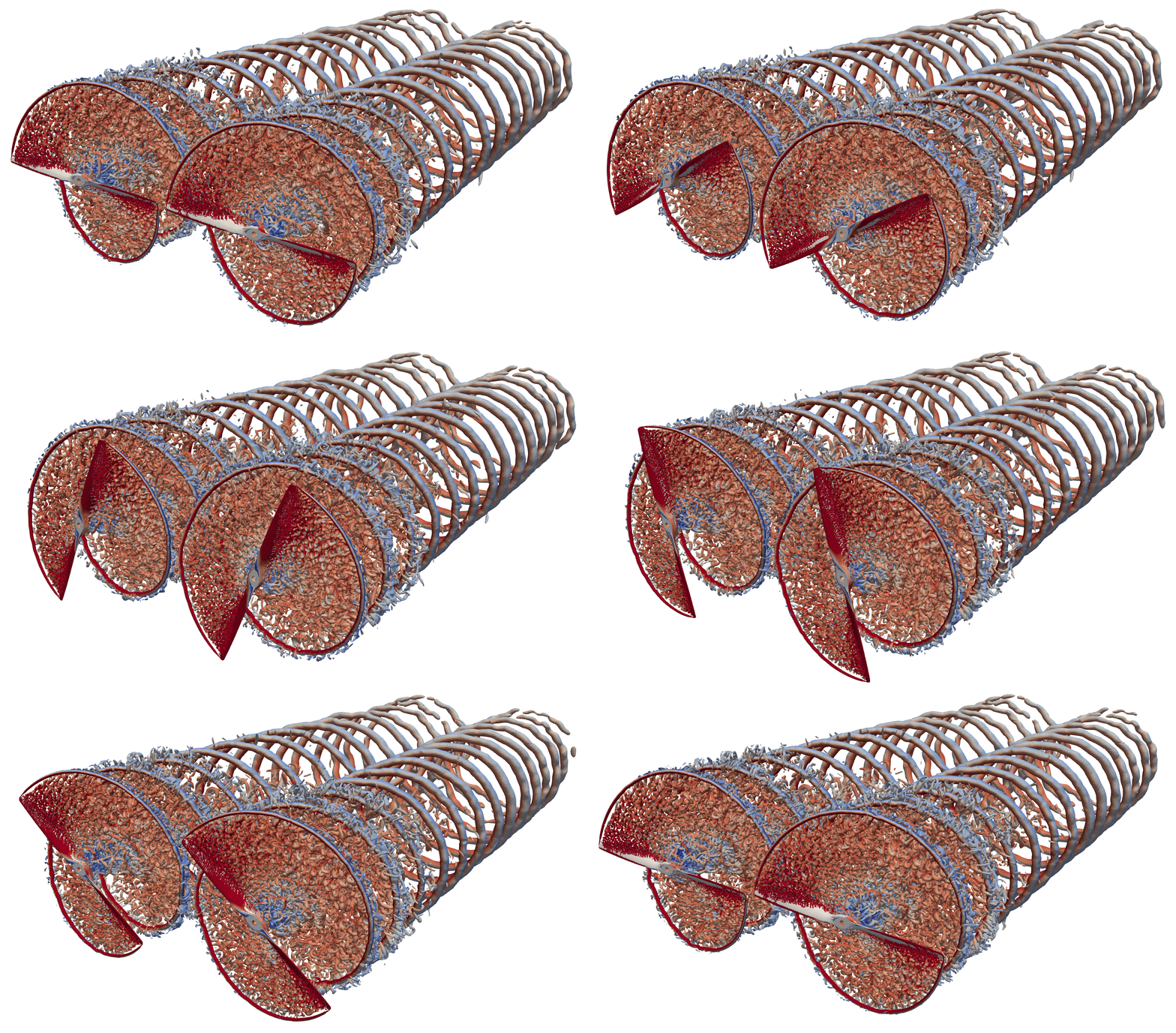
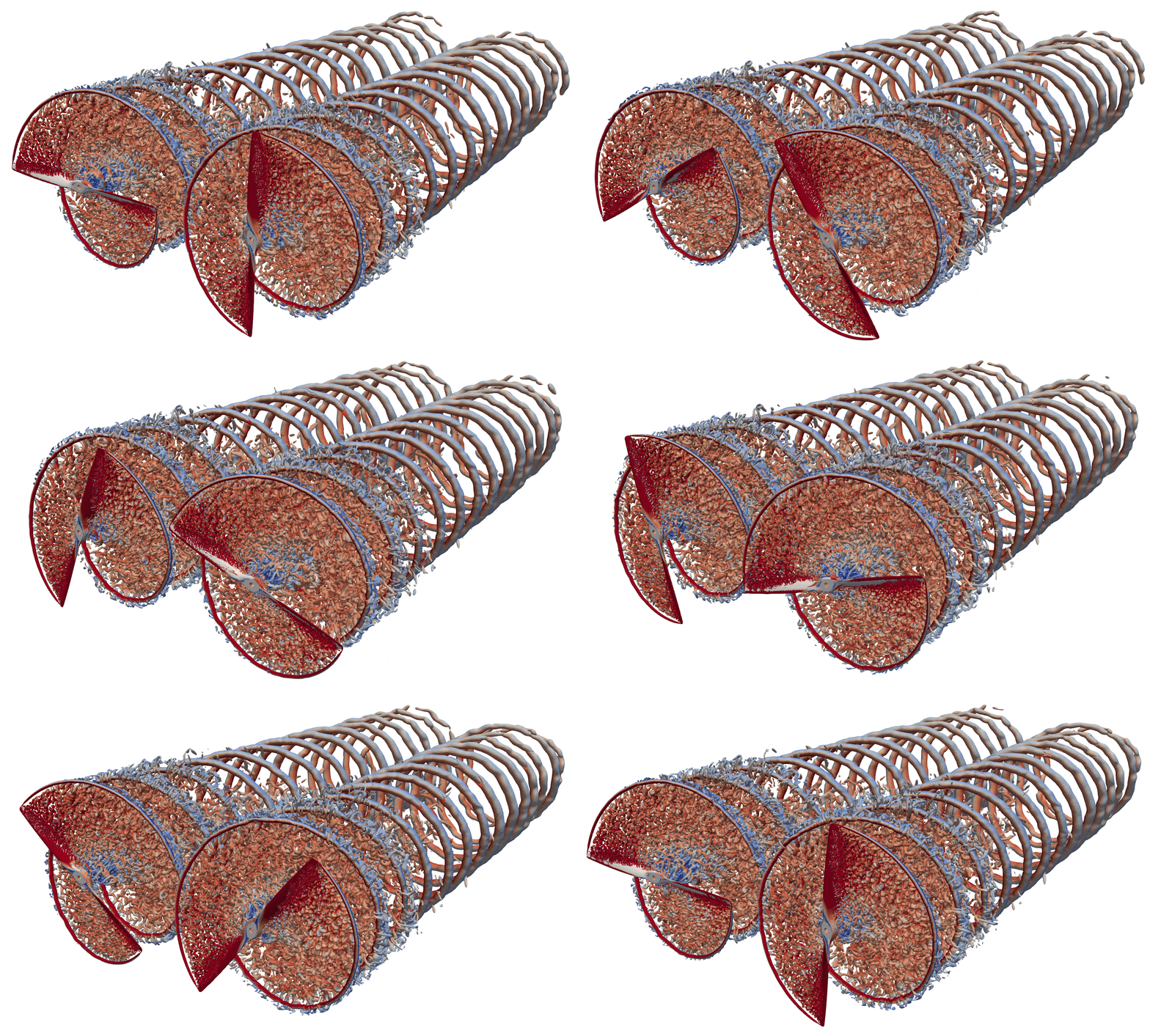
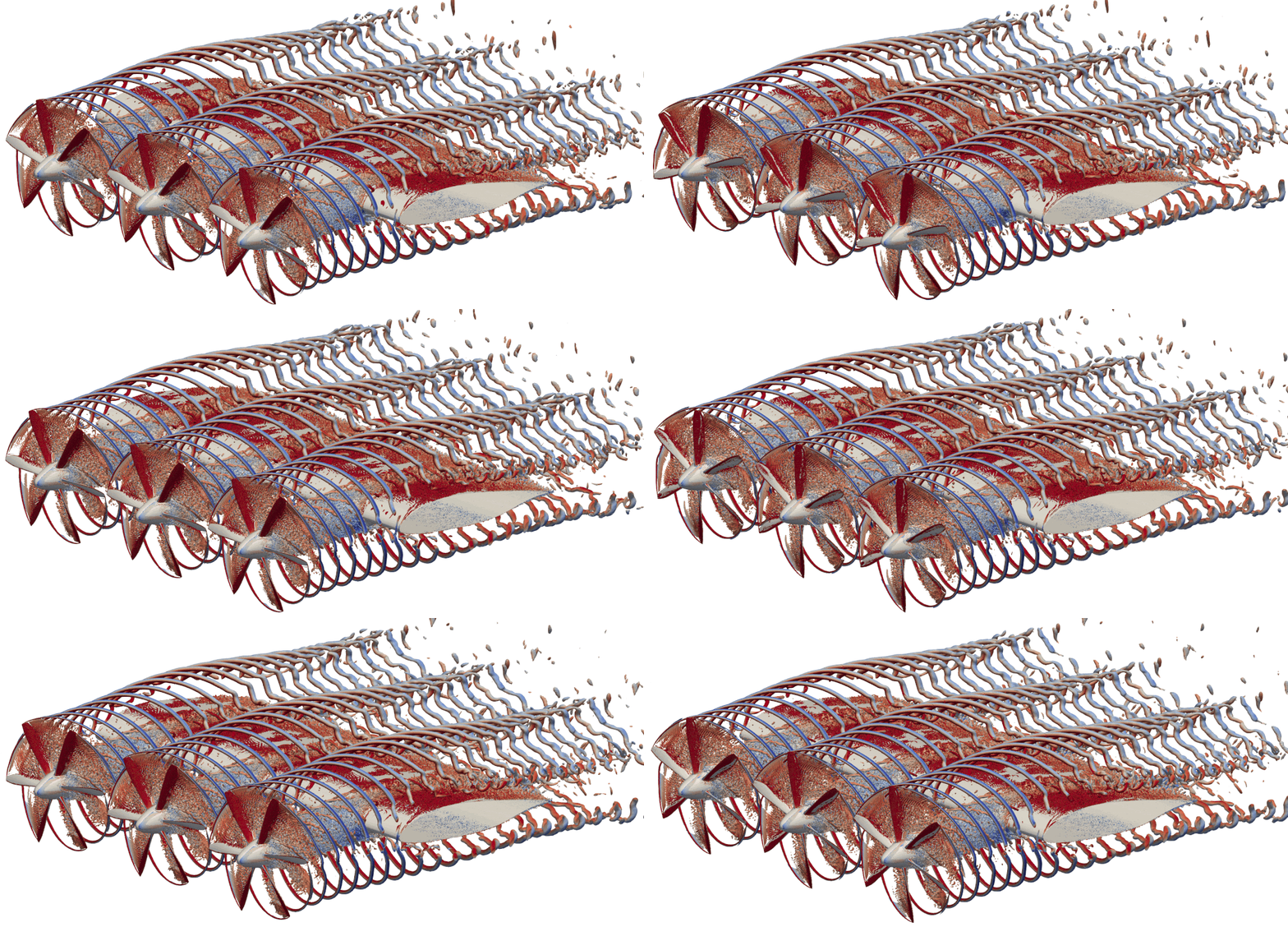
Propeller interaction noise can be analysed by using high-fidelity numerical simulations. Large-eddy simulations can be e.g. conducted with the in-house m-AIA simulation framework. Rotating propeller blades and stationary airframe components are represented using a level-set method on hierarchical Cartesian meshes with solution-adaptive mesh refinement. Depending on the configuration and the required resolution, simulations are performaed with 500 million to 1.5 billion mesh cells, enabling a detailed resolution of blade boundary layers, tip vortices, wake structures, and their interaction with nearby aerodynamic surfaces. Far-field sound is predicted from the simulated unsteady flow field using the Ffowcs Williams–Hawkings acoustic analogy, especially Farassat’s time-domain Formulation 1A.
The main focus is to connect flow mechanisms with acoustic radiation. This includes identifying how propeller tip vortices interact with wing leading edges, how neighboring propellers modify each other’s loading and directivity, and how phase synchronization can be used to reduce tonal noise. In addition to far-field noise prediction, surface-pressure-based localization methods are used to distinguish radiating acoustic components from strong but mostly non-radiating hydrodynamic pressure fluctuations. These methods provide detailed source maps on wings and rotating blades and support the development of quieter propeller-airframe integration concepts.